What Books Have You Read Recently

"Ironwood" is book two of the Connelly's Catalina series, "Nightshade" being the first. I read them both, though out of sequence.

I wouldn't mind having either Stilwell or Longmire as my county sheriff. As it is, my sheriff is a short (just shy of being classified a short person) and overweight woman of the other persuasion. Yep, she checked a lot of boxes.
 
The Art of Fermentation by Sandor Katz. The Jury is still out. One of his sources is an animal rights activist and he talks about his HIV status and how fermented foods are good for his health.
We shall see. If there is good information I'll take it.
 
If there is good information I'll take it.
A book that I have found useful is: "Nourishing Traditions; The Cookbook That Challenges Politically Correct Nutrition and the Diet Dictocrats" by Sally Fallon. Info on whey fermentation and so forth. Also a refreshing appraisal of the value of meat and animal fat in the diet. I used her recipe to make Curcitio, a cabbage ferment with both whey and a little salt. That turned out really well. Interesting book.
 
Operation Berlin by Michael Ridpath. Who done it set in 1930 Berlin. Well told mystery in a historically accurate setting.
Liked it so much that I read the other two books in that series. Adding this author to my list of favorites.
 
"Clown Town", by Mick Herron, the latest in the Slow Horses series.

Jackson Lamb is still Jackson Lamb. (Nothing more needs to be said about his uniqueness.) Diana Taverner's deviousness and ruthlessness is without limits. (My god, that woman . . . ) The slow horses still get caught up in events not of their own doing. (Will they come out unscathed?) Will Catherine Standish take a drink? (I sure hope not.). Someone gets their comeuppance.

Four thumbs up.
 
I read the entire Bernie Gunther series. Bernie is an interesting and somewhat tormented character, though not nearly as tormented as James Lee Burke's Dave Robicheaux. Robicheaux's buddy, Cletus Purcell, is possibly the most interesting fictional person I've met, however I'd not want him as a neighbor.
 
That will be on my to-look-for list now. I have enjoyed Philip Kerr's Bernie Gunther series from the same era, such as "Metropolis". Just ordered John Biggins' "Surgeon's Apprentice" two book series because I enjoyed the "Sailor of Austria" you recommended very much.
Thanks for the kind words. Will look favorably on anything written by John Biggins.
 
Apropos for today and tomorrow. “The Last of the Old Breed. An Oral History of the Final Marines From World War II” by Scott Ellis Davis. Reminisces from the last surviving WWII Marines. Contributions from 133, ages mid-90s to low 100s at the time of their interviews. Including Marines from all 6 Divisions; the nickname “The Old Breed” applies to the First Marine Division. Arranged chronologically by major battle to the end of the war. While the Army and Navy had larger total casualties in the Pacific Theater the Marines had a higher casualty rate, surpassed only by the Merchant Marine. Not history per-se but very interesting none the less. I’m glad I read it.
 
the nickname “The Old Breed” applies to the First Marine Division. Arranged chronologically by major battle to the end of the war. While the Army and Navy had larger total casualties in the Pacific Theater the Marines had a higher casualty rate, surpassed only by the Merchant Marine. Not history per-se but very interesting none the less. I’m glad I read it.
I found it very interesting to read about how the professional privates in 1941 thought about WW2. The last professional private was forced out in 1954 after 30 years of service. Their outlook on the Corps is very different from the officers.
 
Apropos for today and tomorrow. “The Last of the Old Breed. An Oral History of the Final Marines From World War II” by Scott Ellis Davis. Reminisces from the last surviving WWII Marines. Contributions from 133, ages mid-90s to low 100s at the time of their interviews. Including Marines from all 6 Divisions; the nickname “The Old Breed” applies to the First Marine Division. Arranged chronologically by major battle to the end of the war. While the Army and Navy had larger total casualties in the Pacific Theater the Marines had a higher casualty rate, surpassed only by the Merchant Marine. Not history per-se but very interesting none the less. I’m glad I read it.
Good read. have that in my paperback collection.
 
I have read two books written by Marines about their experiences during WWII.
1. Helmet for my Pillow by Robert Leckie
2. With the Old Breed: At Peleliu and Okinawa by Eugene Sledge.
I can recommend both of these books very highly.

I probably would not have read either of them if I hadn't watched the HBO series The Pacific.
Some of that was really hard to watch...

JW, I will have to try and acquire a copy of that book you mentioned.
 
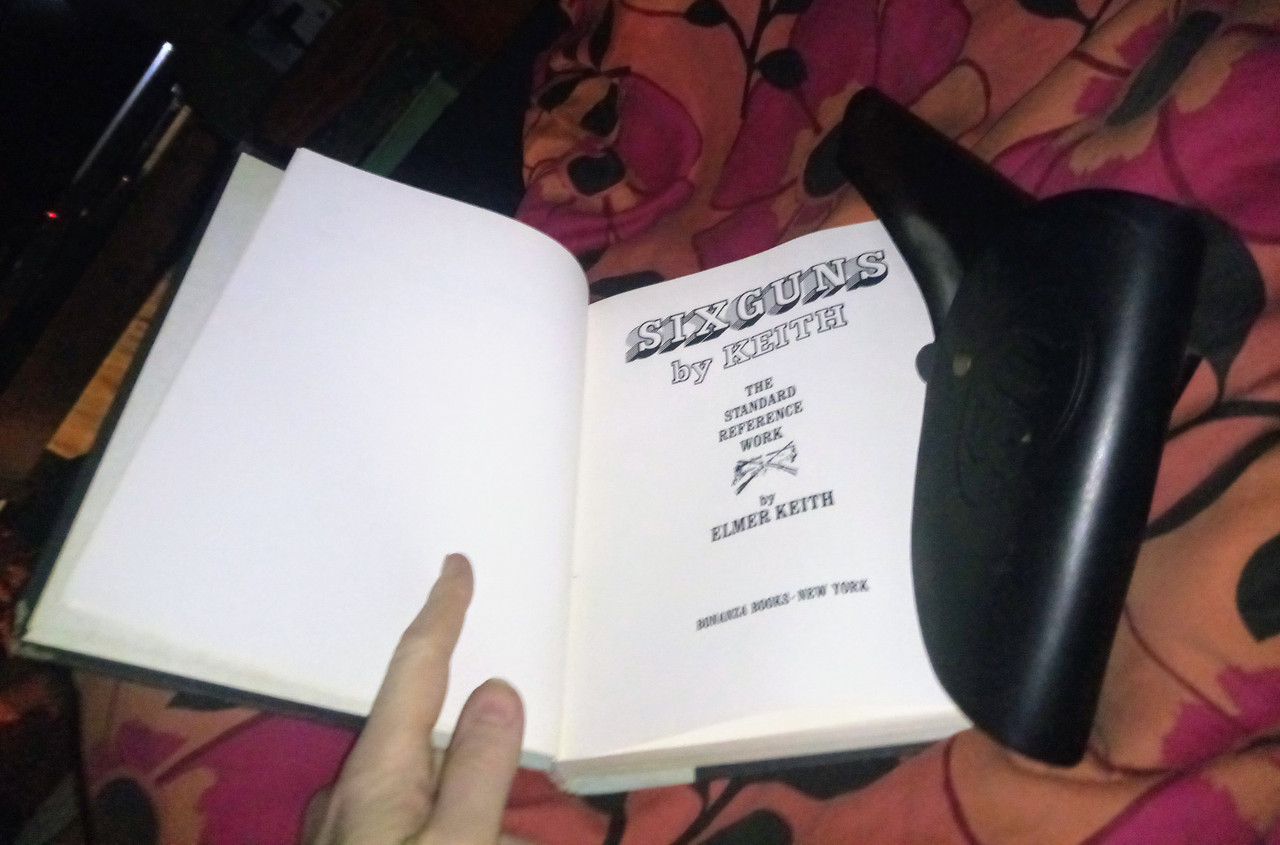
I've been in revolver mood lately.

IMG-20261112-120243-792-2.jpg